Science leaves light and shadows in 2025: from the success of vaccines to the loss of glaciers
Elhuyar has compiled a list with the most relevant news of the year in the field of science and technology
. The list is composed of 10 news items, both international and from our environment.
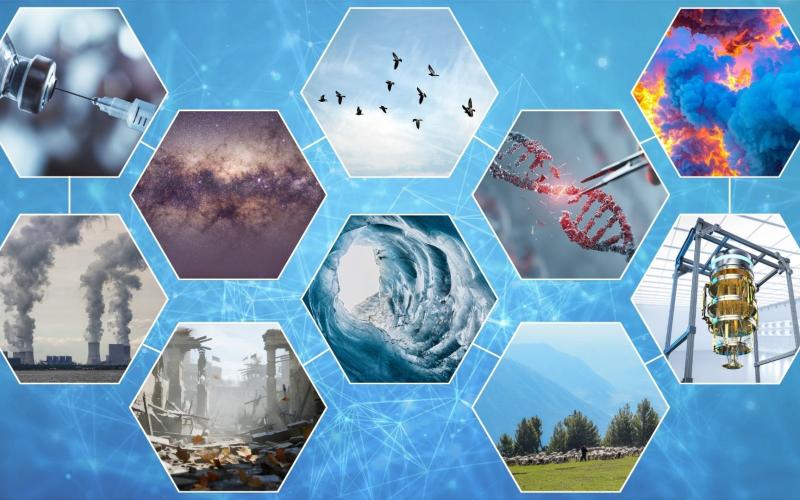
Science has suffered disappointing political interference in several countries in 2025, but it has nevertheless been a fruitful year. Elhuyar’s scientific media has compiled a list of the top 10 news items. Many of this news has aroused enthusiasm in society, some have caused surprise, and other indignation: the news regarding vaccines, fires, avian influenza, the record of CO2 emissions, glaciers, the CRISPR, Gaza, quantum, meadows and the new window to the universe stand out.
1. Vaccines: The vaccines have given us very encouraging news, despite the fact that the US government has been encouraging suspicion about them: the viruses causing uterine cancer have been practically eradicated in Denmark, and in the CAPV itself the hospitalizations for bronchiolitis of young boys and girls have decreased by 50%, thanks to vaccination campaigns.
Elhuyar Zientzia / Text: The cancer of the uterus
2. The loss of glaciers: The glacier of the Monte Perdida, in the Pyrenees, has been one of the protagonists of the year, becoming a symbol of the global loss of glaciers that is causing the climate emergency.
Elhuyar Zientzia / Text: When a glacier is lost
Elhuyar Zientzia / Audio: Interview with Eñaut Izagirre
3. The fire: The human being learned to light and use fire much earlier than is believed, more than 400,000 years ago. In the Basque Country there has also been significant news related to human evolution, since utensils made from whale bones have been found 20,000 years ago; the oldest known.
Elhuyar Zientzia / Text: The fire
Elhuyar Zientzia / Text: Whale bone utensils
4. The most detailed images of the sky: The Vera C Observatory. Rubin begins to work and will get the most detailed images of the history of the visible sky in the southern hemisphere.
Elhuyar Zientzia / Text: The first images of Vera C. Rubin
Elhuyar Zientzia / Audiovisual: Telescopes: the limits of the universe, closer
5. CRISPR therapy: CRISPR gene therapy has achieved its first major success by curing a child born with a rare genetic disease.
Elhuyar Zientzia / Text: Success of CRISPR therapy
6. Record of CO2 surpassed: One of the most worrying news is that this year fossil fuels have surpassed the CO2 record. The energy transition and climate change are becoming news year after year.
Elhuyar Zientzia / Text: Record of carbon emissions from fossil fuels
Elhuyar Zientzia / Audiovisual: Keys to the energy transition
7. Avian influenza: The disaster that avian influenza is causing on animals has also made headlines throughout the year.
Elhuyar Zientzia / Text: The population of marine elephants of South Georgia is reduced by half
Elhuyar Zientzia/Audiovisual: “We are concerned about the trend of emerging diseases.”
8. Computer Basque Quantum: In the International Year of Quantum, Donostia’s Basque Quantum computer has made headlines in the Basque Country and internationally. We are joined by Javier Aizpurua, scientific director of BasQ.
Elhuyar Zientzia / Audiovisual: Interview with Javier Aizpurua
Elhuyar Zientzia / Audio: One mile in Donostia
9. The massacre in Gaza: Even science has begun to make the consequences of the Gaza massacre visible. The investigations of the health personnel who are there give us their approach.
Elhuyar Zientzia / Text: Consequences of the massacre in Gaza
10. The meadows: The list ends with a theme that will have prominence in 2026: the meadows. They are a symbol of biodiversity and a witness to a difficult future if we do not take care of grazing and extensive livestock farming. 1 January marks the start of the International Year of Grasslands and Shepherds.
Elhuyar Zientzia / Text: The meadows, something more than grass